






Tell us briefly what the ‘Schleudergang 1000’ is and what made you decide to sign up.
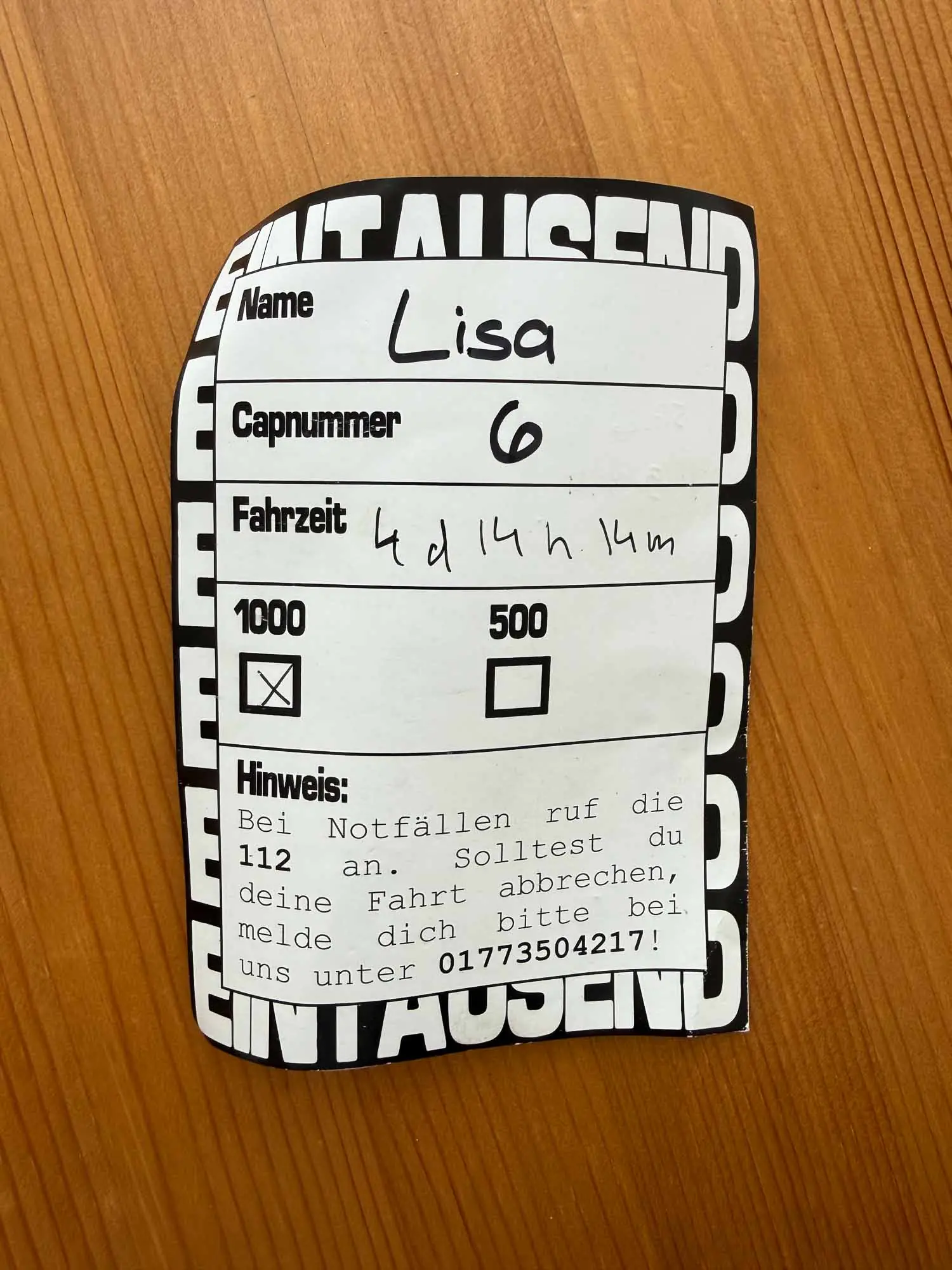
Schleudergang 1000 is a new self-supported ultra-cycling event organised by Schleudergang Dresden and Schleudergang Nuremberg. It is not a traditional race and there are no rankings. The route covers 1,000 kilometres and approximately 14,000 metres of elevation gain, and must be completed within five days. The start is in either Dresden or Nuremberg. There is also a checkpoint in Loket, which is situated roughly halfway along the route in the Czech Republic.
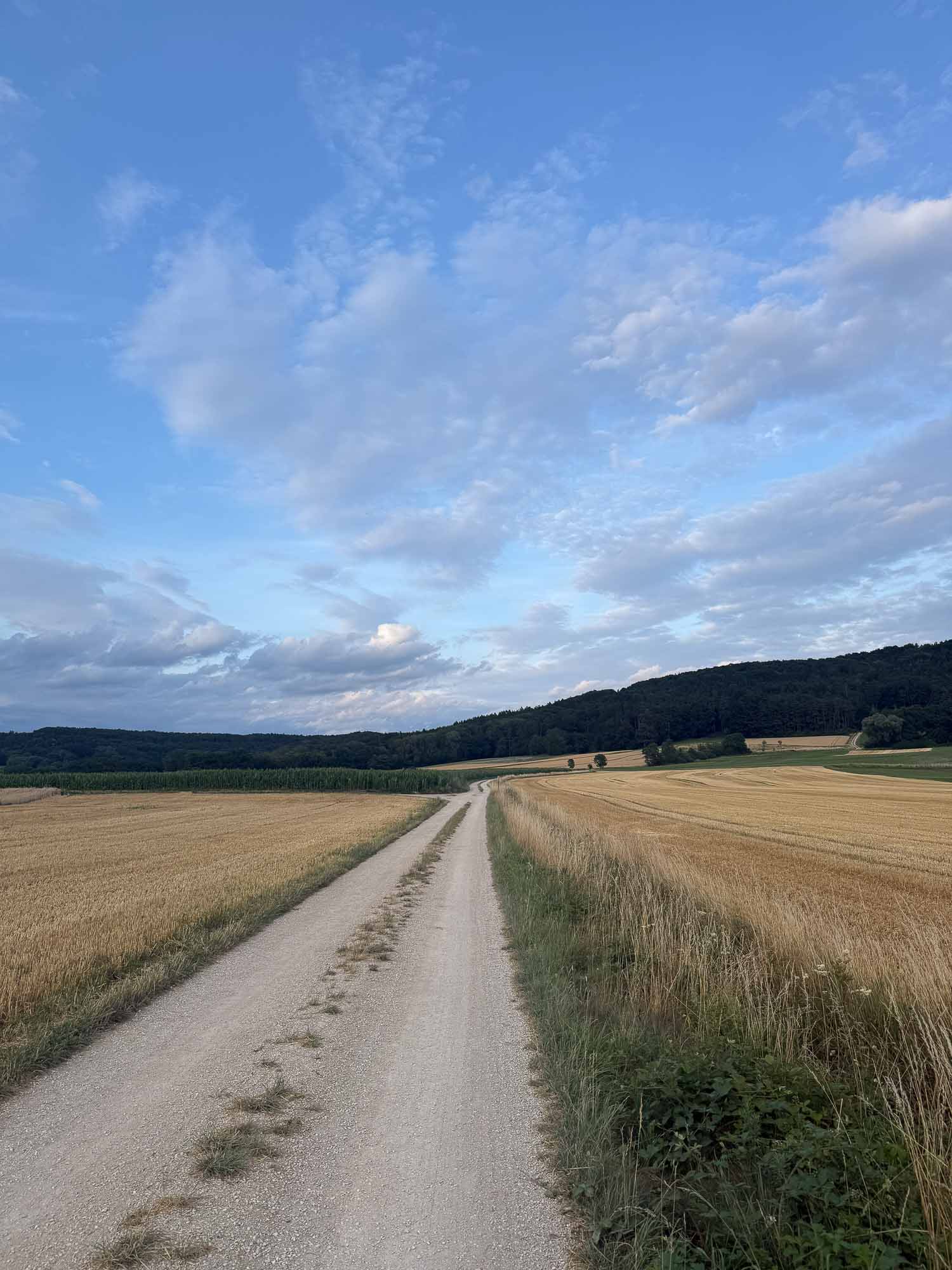
I had been wanting for quite some time to do an ultra-distance ride on the bike. It was possible to start from Dresden and so there was no reason for me not to a16> me no reason not to just give it a go.
1,000 km, self-supported, travelling alone. What does that actually mean?
The fact that it’s ‘self-supported’ and you’re on your own says a lot about the event. 😊 Basically, it means that whilst on the ride, you have to sort out your own accommodation, food and repairs by yourself. Everyone is only allowed to make use of what is available to all the other participants. For example, if I had an aunt who lived in Nuremberg, I wouldn’t have been allowed to stay at her place.
The route had been finalised and there was a roadbook detailing refreshment stops and important route information. There was also a messaging group where all information and updates were shared.
I had to focus mainly on finding a place to sleep and my food to worry about. When do I take a break, where and for how long? Will my supplies be enough for the next section of the route? Since I from the start had planned to stay in accommodation, I took my sleeping mat and my sleeping bag at home left.
It was your first experience in that field. How did you prepare for it?
Looking back now, I realise I may not have prepared quite enough. I’m used to covering longer distances. But I wasn’t quite as well prepared for the elevation gain as I should have been.
Just before the event, I did two more ‘training sessions’. A one-day ride from Dresden to Prague covering 215 km, and then I cycled the RockHead Gravel route through Saxony over two days, covering a total distance of over 300 km and approximately 4,500 metres of elevation gain. That was also the perfect opportunity to test my setup.
If you had to describe the race in three words?
A rollercoaster ride of emotions.
The FLINTA aspect
The event has its own FLINTA category. Did you notice that too? Why is something like that important?
I certainly perceived the dedicated FLINTA category in that way. The organiser put a great deal of effort into this aspect. There was even an online session for FLINTA people beforehand, where we could ask further questions. This certainly helped to overcome a few more hurdles. There was also a separate Signal group here where people could discuss specific topics.
In my view, this category is so important in ensuring that everyone feels comfortable and seen.
What was the atmosphere like amongst the FLINTA participants? Was there a sense of community?
I found the atmosphere amongst the FLINTA participants to be very open and warm. As far as I know, there were only four FLINTA people, including myself, who cycled the 1,000-kilometre route from Dresden. Unfortunately, we didn’t have much opportunity to interact, as the chance simply didn’t arise.
But there were still female participants who cycled the 500 km and and shortly after us set off again. Of them I have on the first day always once again some seen. There we exchanged a smile along the route and briefly with one another chatted. That’s when it occurred to me that in any case I definitely got a sense of community.
What would you say to other FLINTA people who dream of an adventure like this but are still hesitating?
In their case, I’d first like to know why they’re still hesitating, so that I might be able to allay their fears. Otherwise, I can only encourage everyone to just take the plunge. Don’t overthink it beforehand – just go for it. It’s worth it!
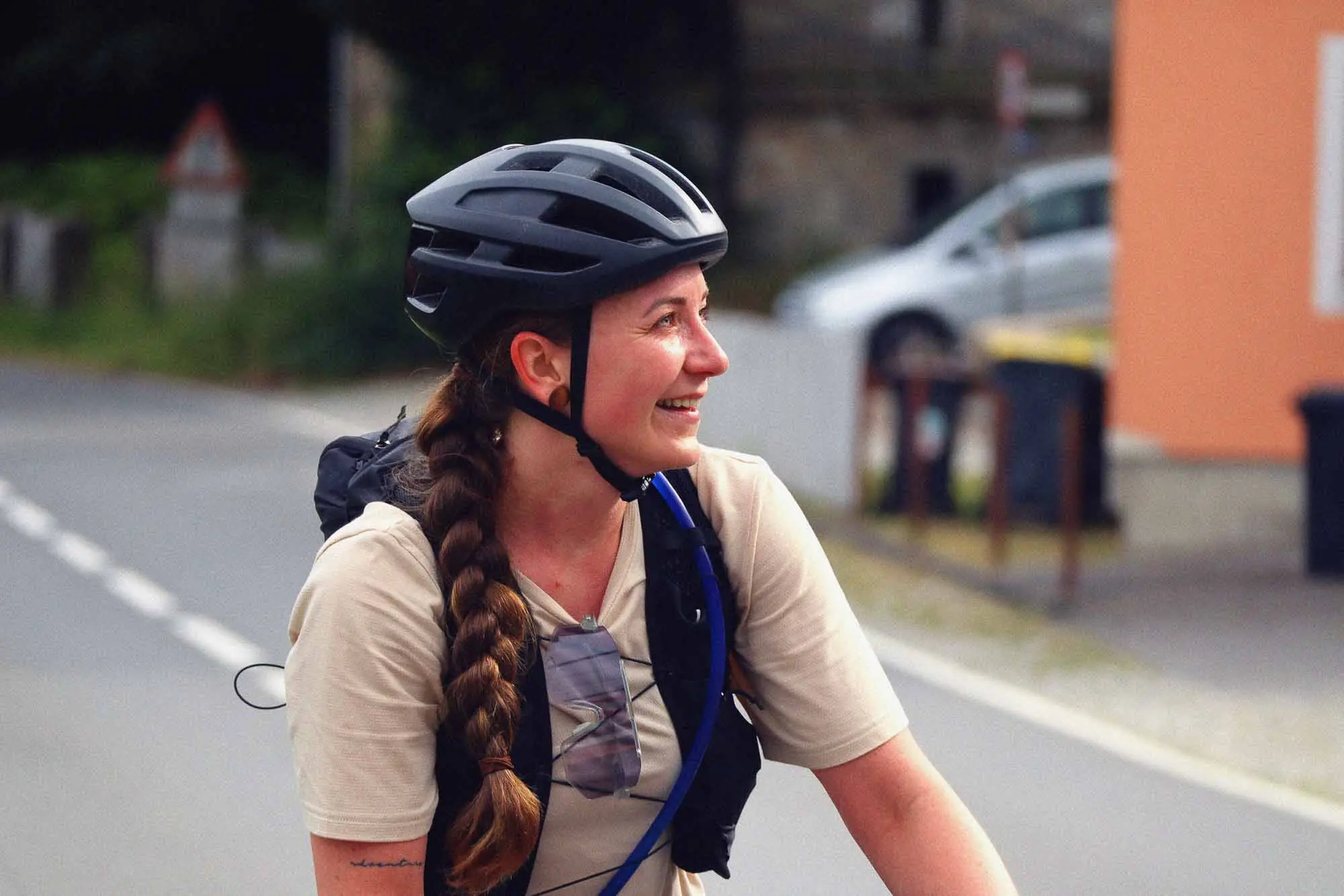
Photo: Simon Epperlein @wolkenburger
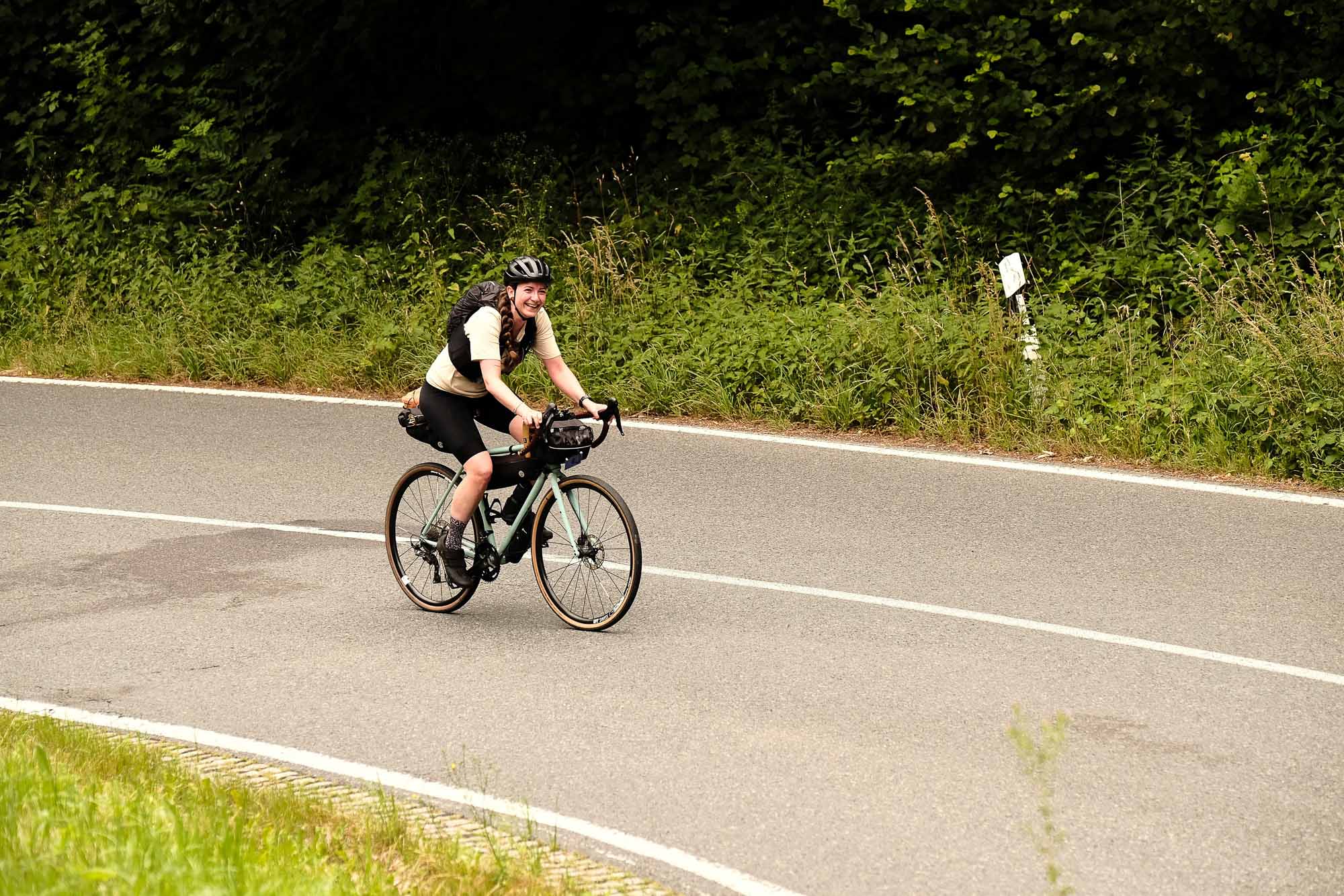
Photo: Leon @schleudergang.1000
On the track
Which moment has stuck in your memory the most? What was your ‘wow’ moment?
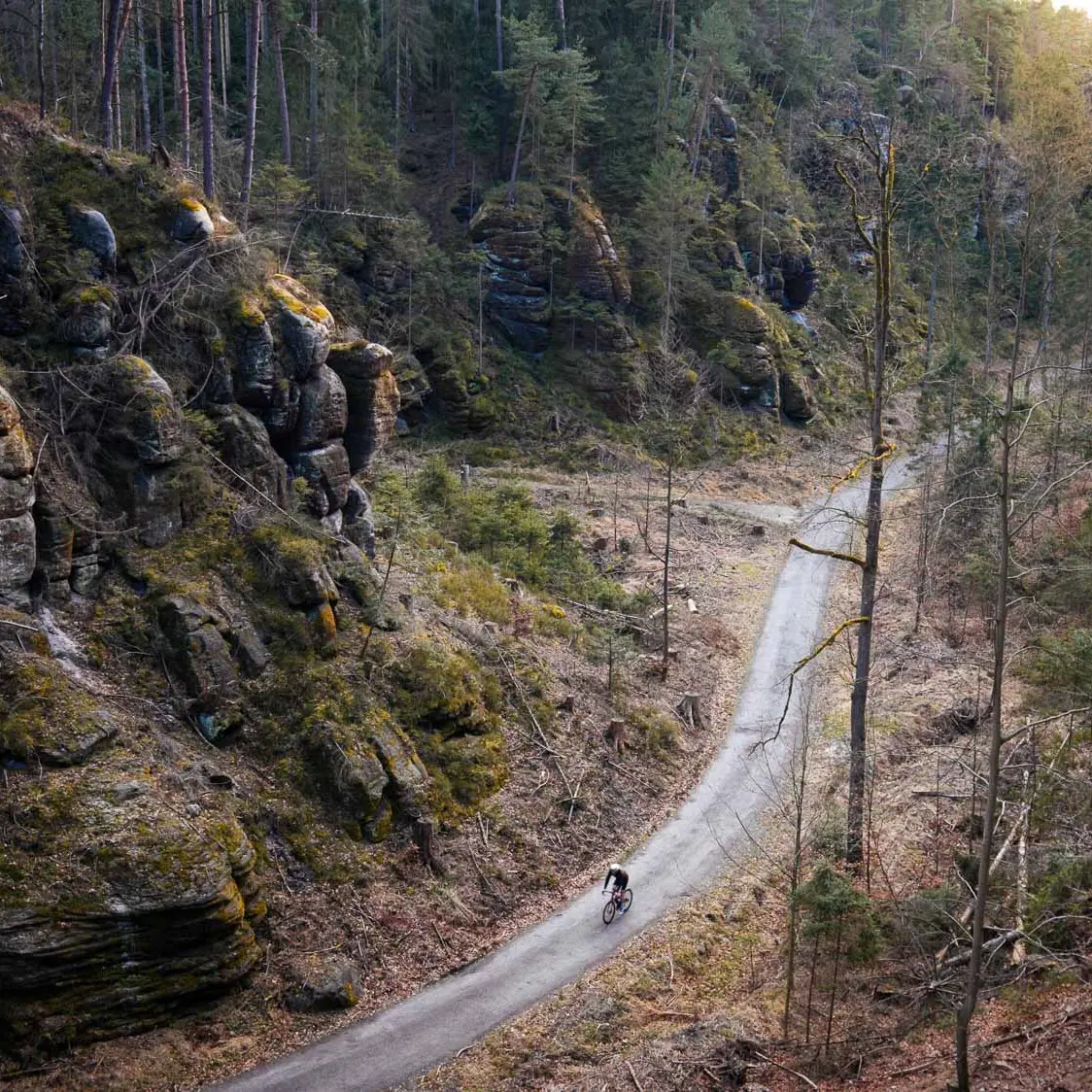
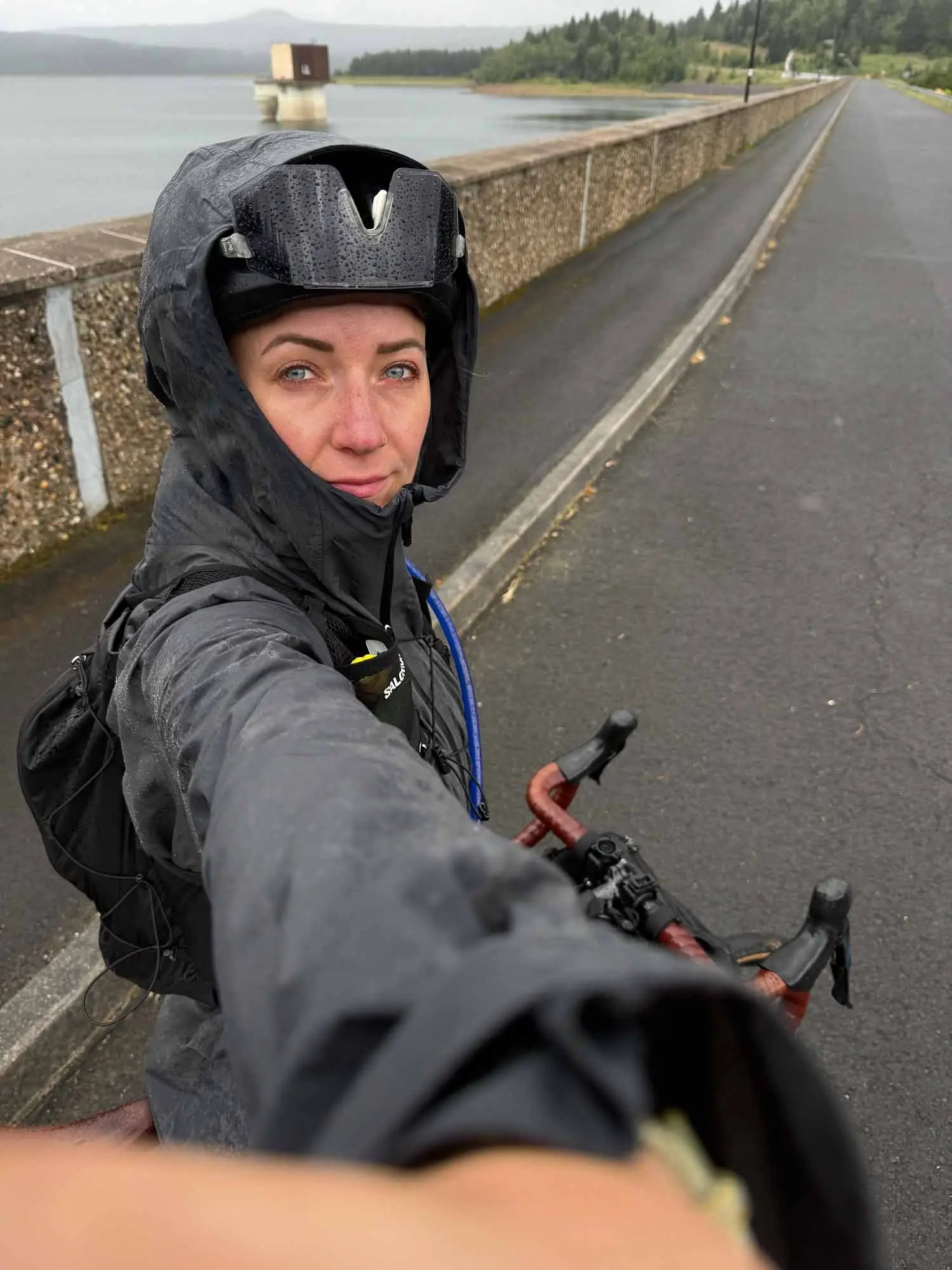
The moment that has stayed with me most is when I cycled over the ridge of the Ore Mountains. I’d been cycling in the rain for hours beforehand; I was cold and I just didn’t want to go on any more. On the other side, the weather suddenly cleared up and the sun warmed me up again. And I really enjoyed the final stretch of the route through Meissen. Meissen is my home town, and cycling through it once more just before the finish line was something very special for me.
My personal ‘WOW’ moment, though, was all the lovely people I got to meet along the route. I hadn’t expected that at all. I received support at the checkpoints, I got messages, and I knew that people were following my tracking and cheering me on. But of course there were also my family, friends and lots of people from my circle who gave me a boost with messages and phone calls and kept cheering me on. Although I was riding solo and self-supported, I didn’t feel alone. That support gave me endless strength and kept me going time and time again.
Was there ever a moment when you briefly thought, ‘This isn’t going to work out’?
Absolutely. That moment happened twice. The first time, 150 kilometres before Nuremberg, I faced a really nasty headwind, which meant I even had to pedal hard going downhill. Throughout those 150 kilometres, I kept thinking about how easy it would be to pull out at the checkpoint in Nuremberg.
The second moment was on the fifth day, early in the morning. I set off from the checkpoint in Loket at 4.30 o’clock and cycled the first 80 km in the rain . On the descents I was so cold, that I was shivering properly on my bike. At this point I asked myself whether I at all physically capable of doing so.
What went completely differently to plan?
My time management went completely differently to plan. Haha. It still makes me laugh. My plan was to cycle well over 200 km every day, and even 250 km on the third day. That way, I wouldn’t have to cycle another 200 km on my last day. Surprise. The last day turned out to be my longest, at 237 km.
What did you eat and where did you sleep?
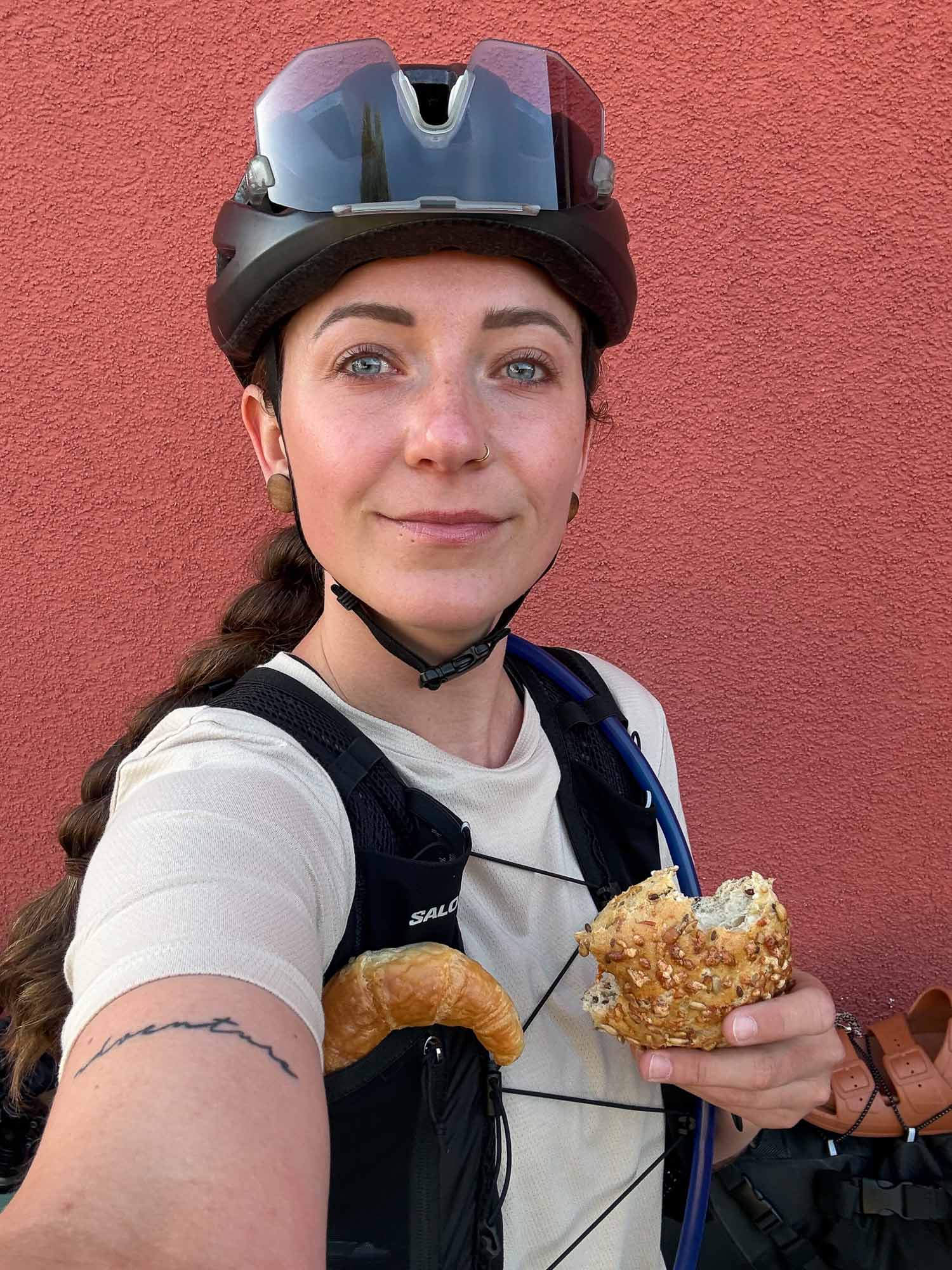
I had loads of snacks with me right from the start. I mainly lived on oat bars, bananas and fruit pouches, loooads of coffee and gummy bears. Every now and then I’d grab a savoury sandwich at a petrol station or a fresh cheese roll or croissant from the bakery.
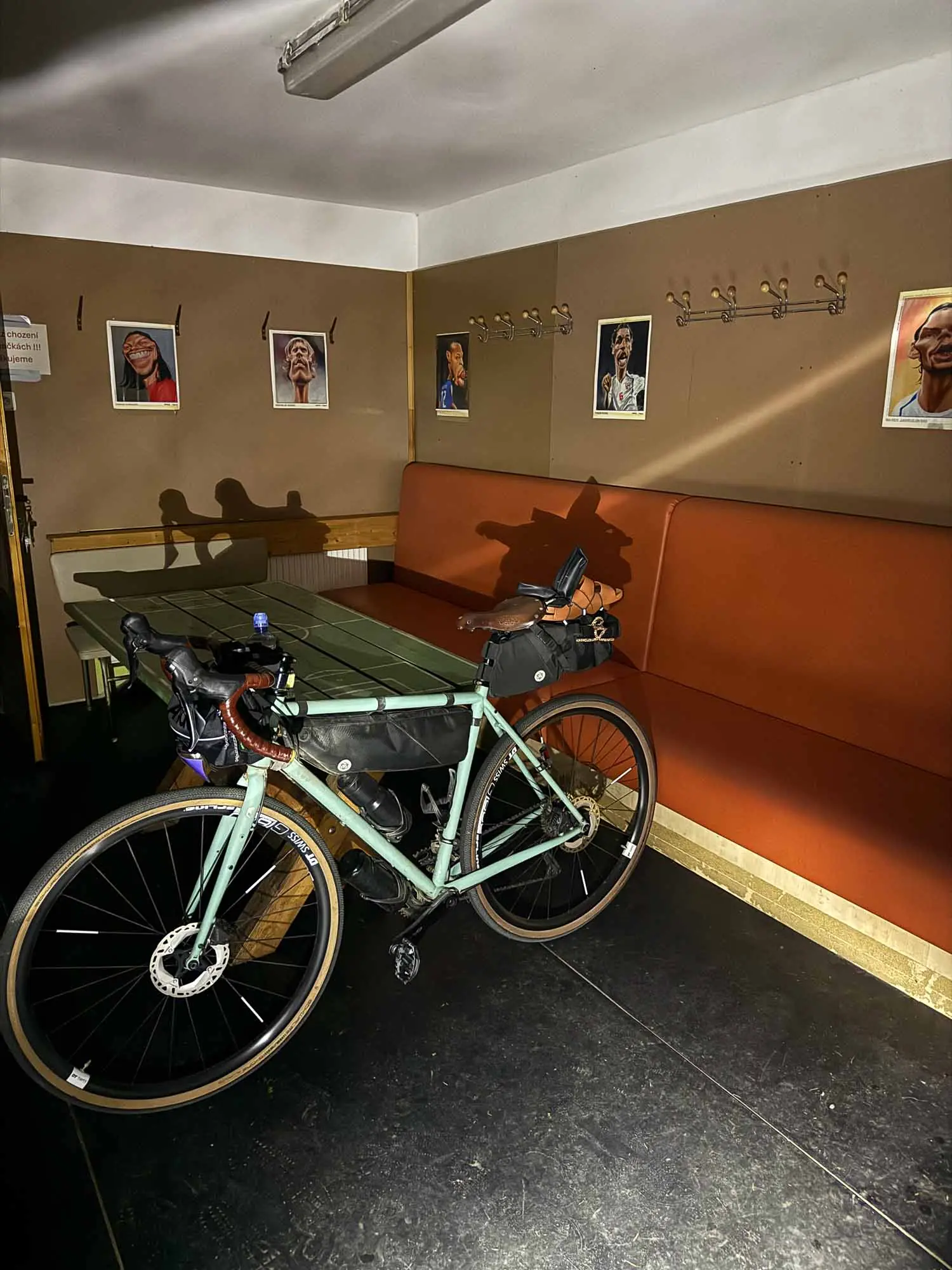
I slept in a hotel for the first three nights, or rather in an Airbnb accommodation. As there was no race, we were allowed to book the accommodation in advance well beforehand. It’s no use, if the daily mileage cannot be met can be met. So I had to change my plans on the spur of the moment as well. Last night I spent in the Czech Republic at a football club on the changing room bench slept. Things always turn out differently than planned, but that’s what makes it so appealing to me as well.
The setup
What bike did you ride and what was your setup like?
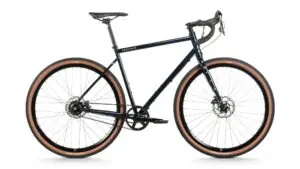
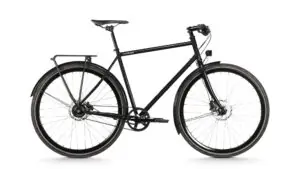
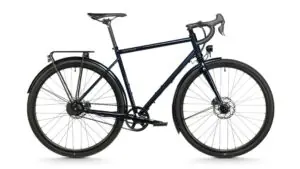
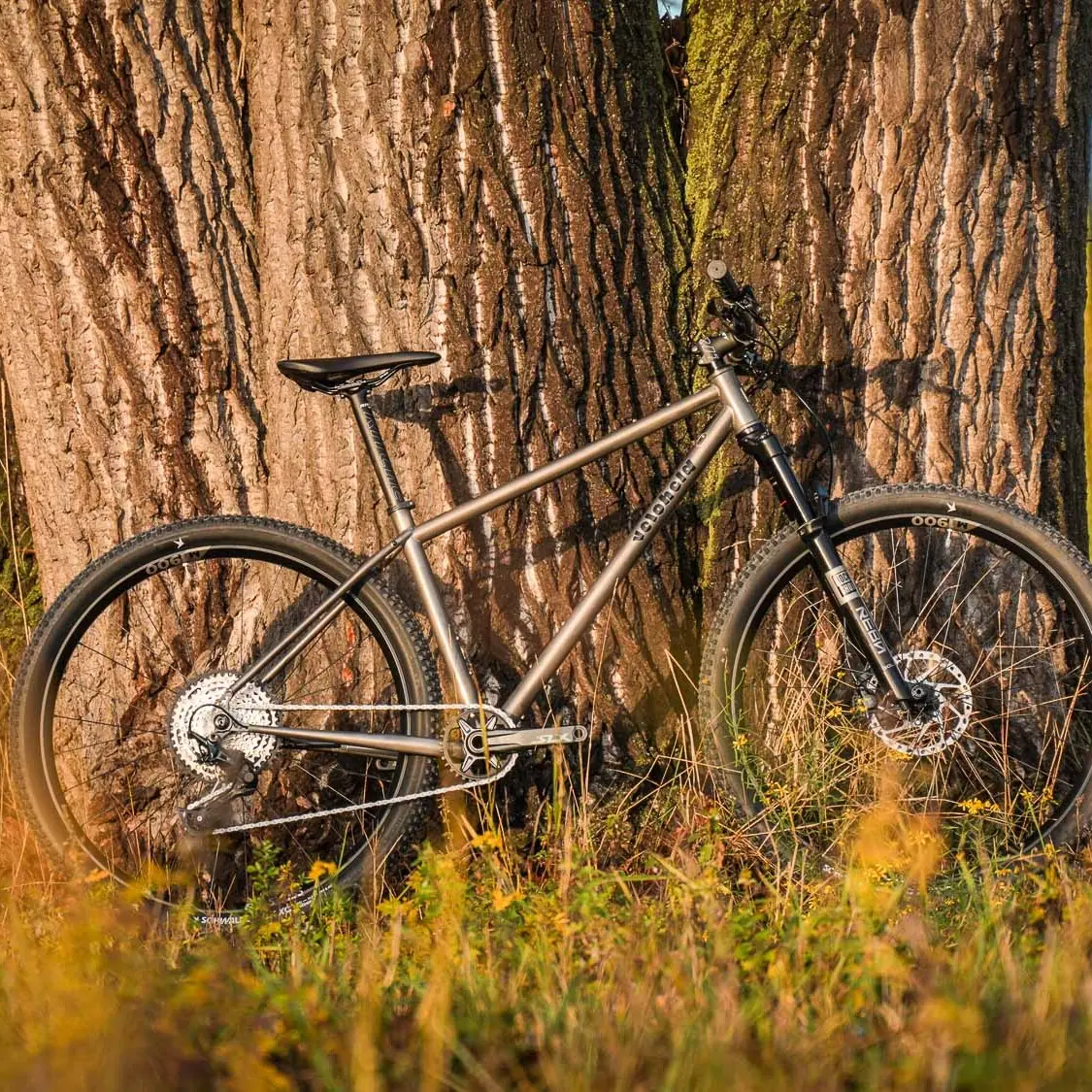
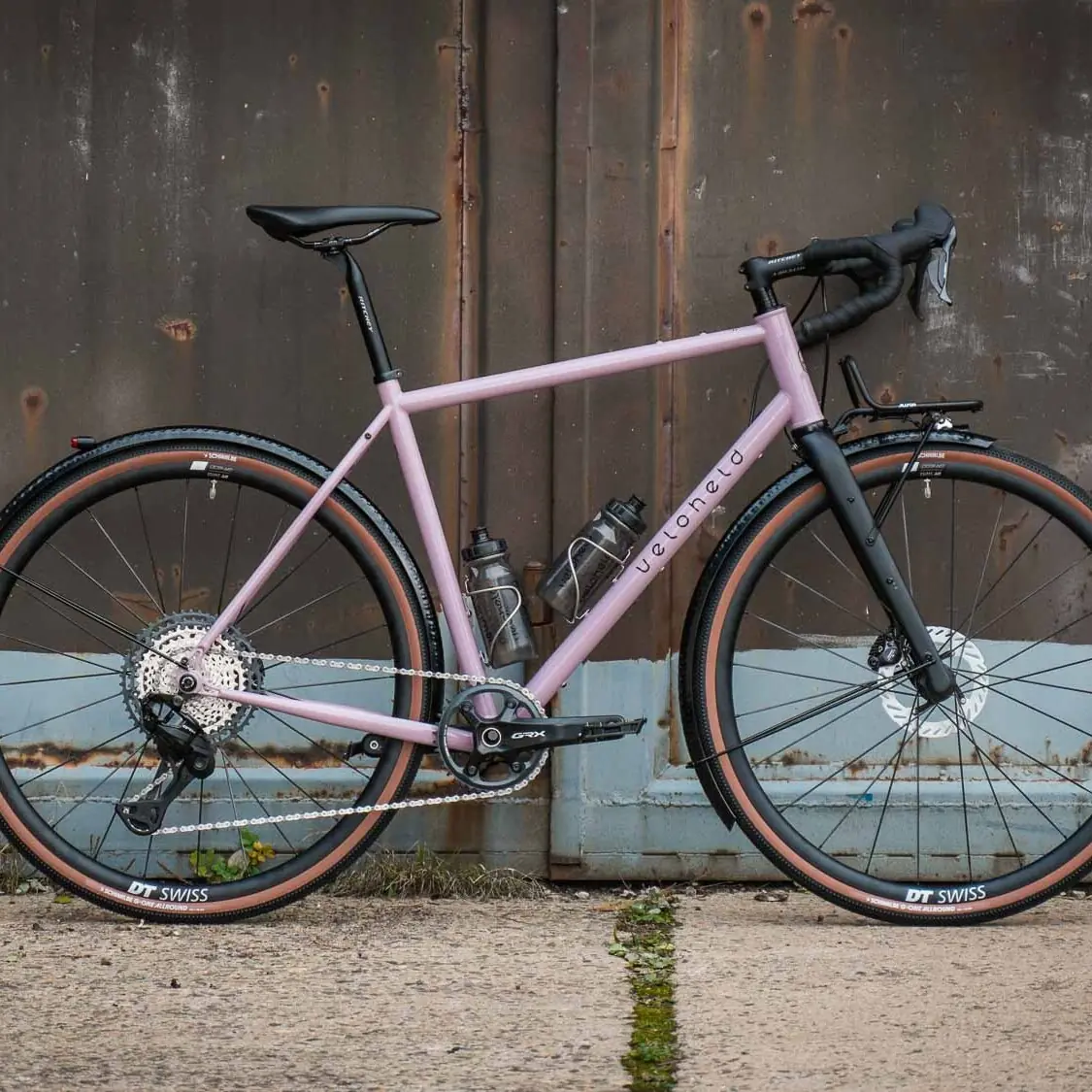
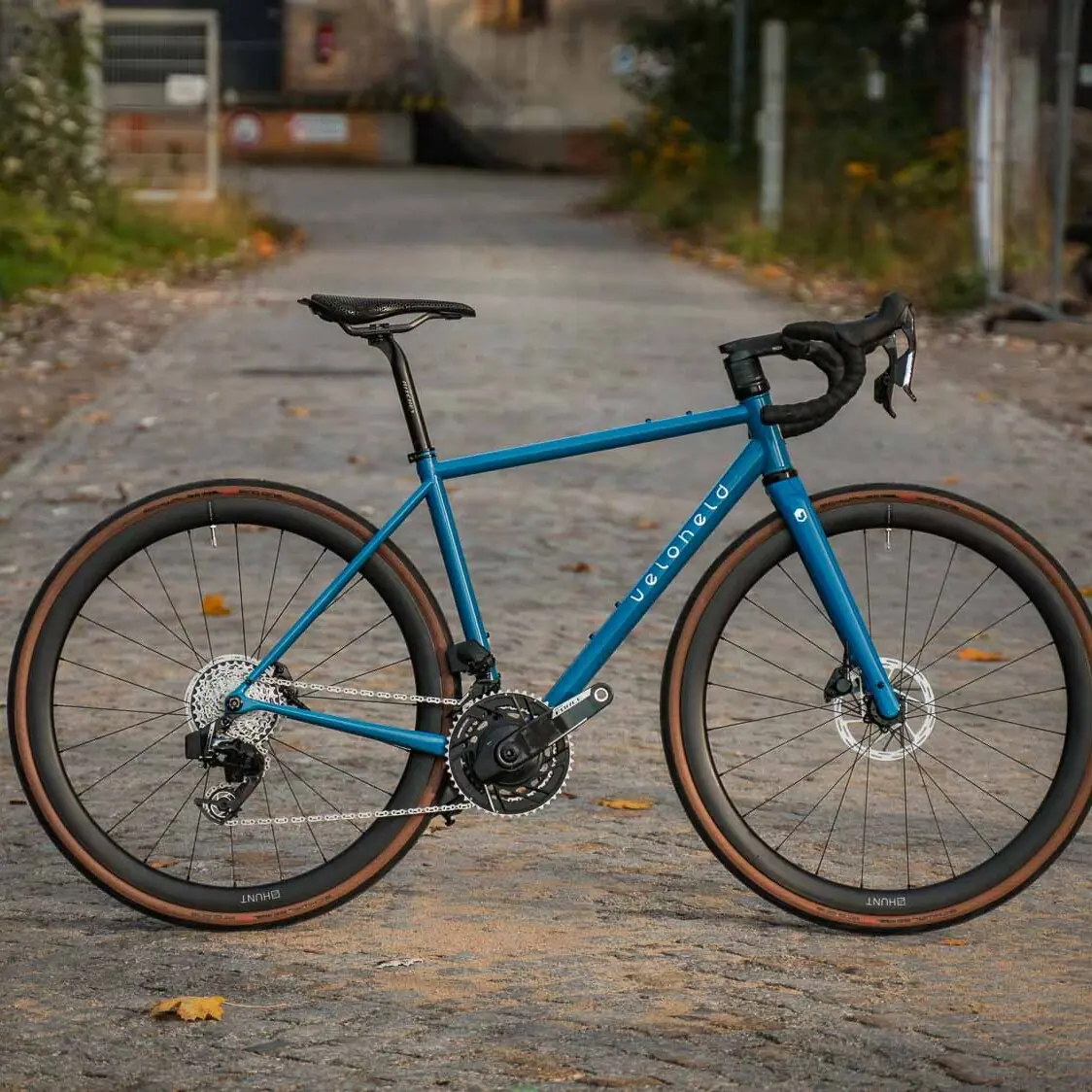
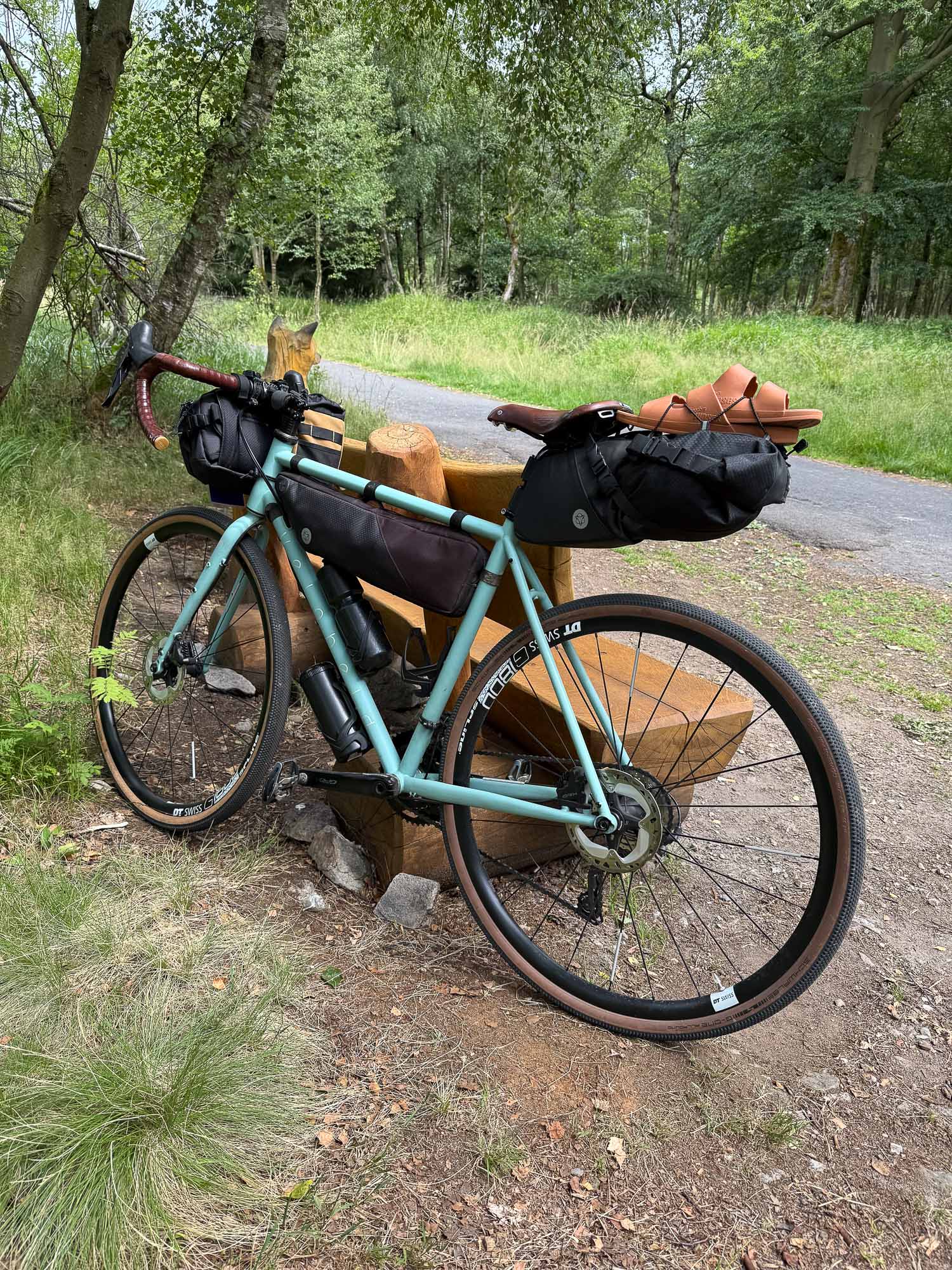
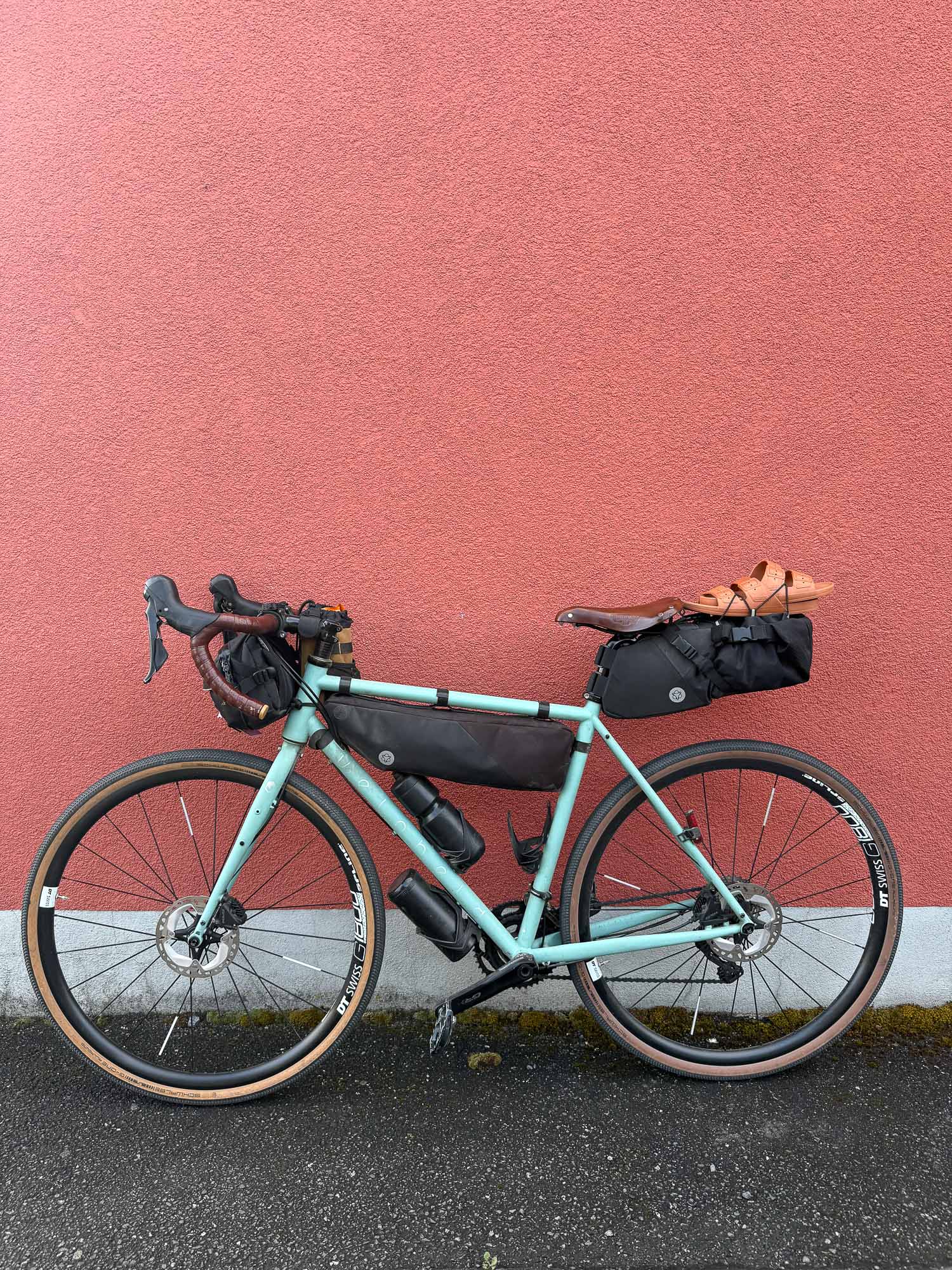
I’ve been riding the iconX from veloheld. I’ve had the bike for six years now, and it has been a faithful companion on all my adventures ever since.
My setup consisted of the following items:
First-aid kit| High-visibility vest | Front and rear light|saddle bag | Frame bag| Handlebar bag | Snack bag | Running vest with 2-litre hydration bladder | 1x complete change of kit for cycling (shirt, short bib shorts, socks and sports bra) | 1x casual outfit| Puncture repair kit complete with 2 inner tubes| Toiletries | small towel| Rain jacket | Flip-flops | Power bank and charging cable | AirPods | Head torch | Navigating by phone with Komoot | Snacks, electrolyte tablets
Was there any kit that saved you? And what would you have left at home?
My casual clothes saved me on the last day from trouble, because my cycling kit was simply still wet and hadn’t dried anymore by then not anymore dried by then not anymore dried by then not anymore dried by then not anymore dried by then not anymore dried by then not anymore dried by then not hadn’t dried out anymore yet. And the reusable emergency blanket was worth its weight in gold last night. I hadn’t actually expected all of this to happen. I had everything I needed. I can’t think of anything right now that I was missing.
But if I may add one more thing: I would definitely recommend having a bike fitting done before undertaking something like this. I didn’t do that myself, and it would certainly have been helpful in one way or another if I’d done so beforehand.
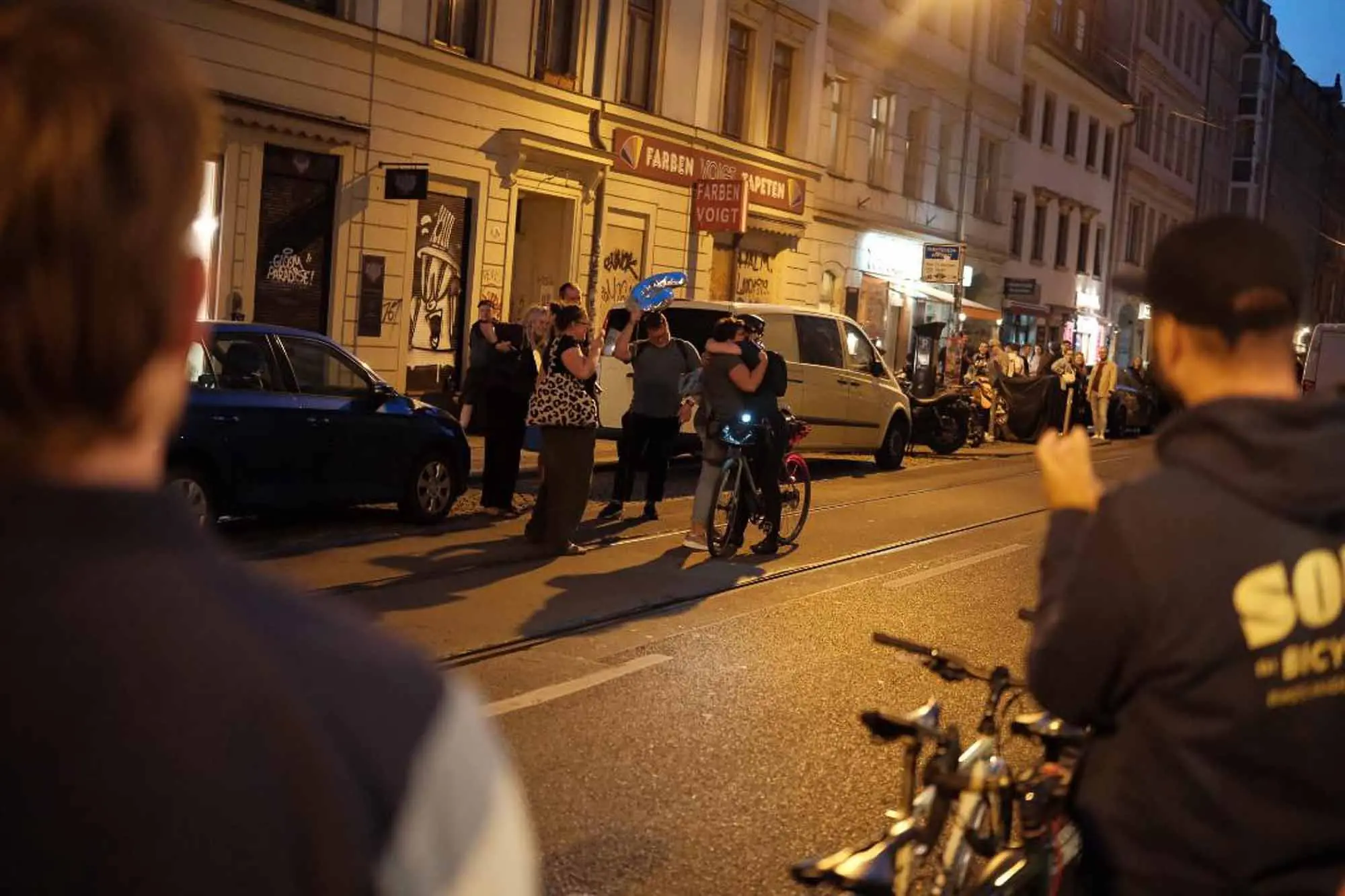
Photo: Stephan Böhlig @boehlr
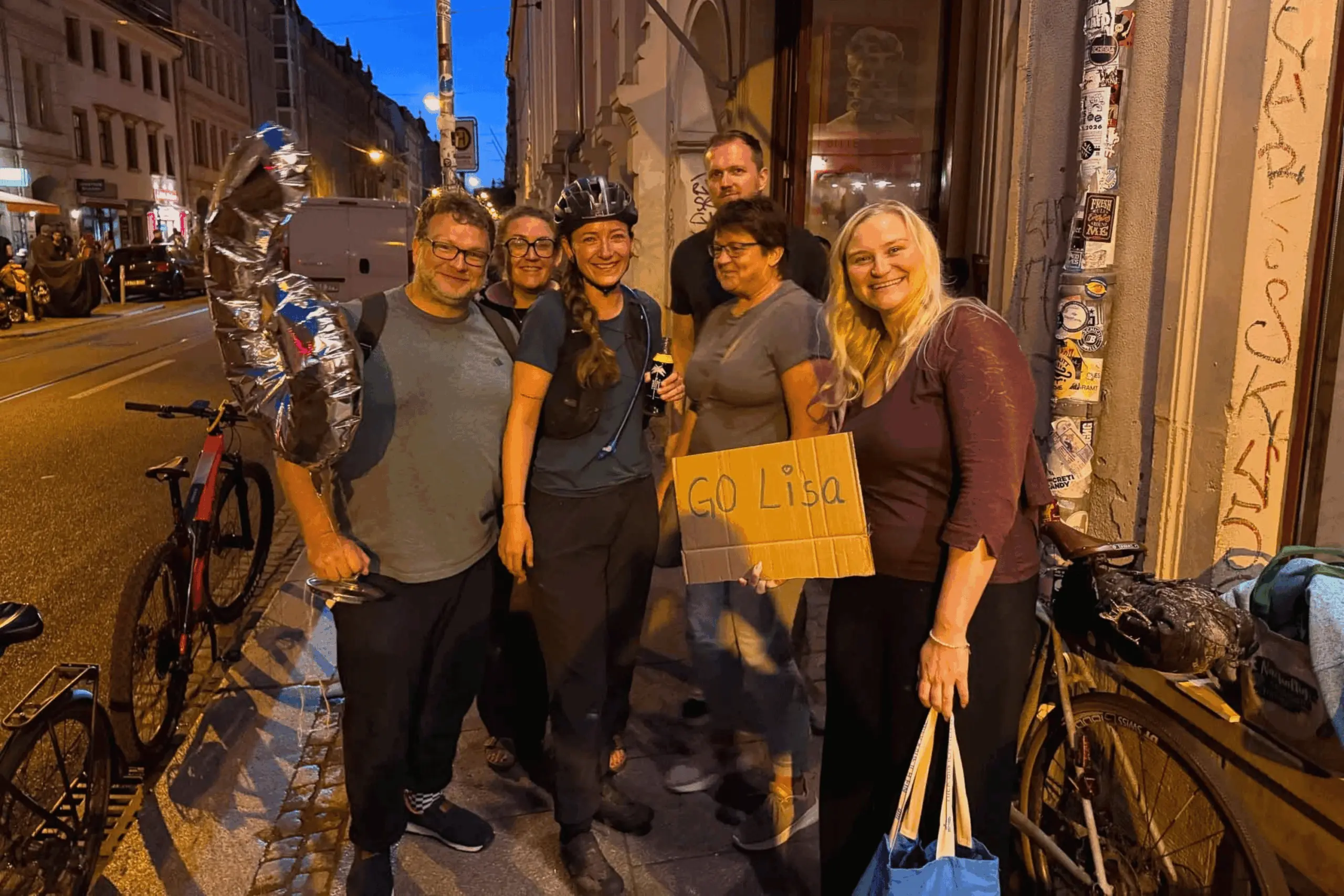
Photo: Lisa @more.than.ride
Done. And ready for more.
You’ve finished it. How did that feel?
The feeling was indescribable. That feeling alone makes it worth taking part in an ultra. When I crossed the finish line, I was warmly welcomed at the finishers’ party by loads of people from the running community and, of course, by my loved ones. I was incredibly proud – especially because I knew just what a struggle it had been. Over such a long distance, it’s not all plain sailing, of course. A few tears were shed too. That made me all the happier to have made it.
Has this adventure changed your relationship with cycling?
Absolutely. I’ve become more confident in lots of ways. After all, I spent five days living on my bike. 😊 I’ve learnt to have more faith in myself. For example, I changed a inner tube outdoors for the first time without any help. That was a huge, huge step forward.
What is coming next?
At present there are no plans. But with two events I’m toying with the idea of I perhaps already a bit …
Thank you, Lisa!
To be honest, we’re absolutely knackered. 1,000 kilometres, 14,000 metres of elevation gain, hours of rain, a nasty headwind, a night spent on a changing room bench, and on top of that, our first ever tyre change by the side of the road. And all that on our very first ultra. Many people would have just stayed in their hotel bed after the second day.
Lisa carried on. And in the end, she rolled back into Dresden feeling pretty proud, where her loved ones were already waiting for her.
Thanks for taking so much time to answer our questions! And if you’re currently toying with the idea of embarking on an adventure like this yourself: Lisa’s answer to question seven applies to everyone. Don’t worry too much about it in advance and just go in!!
Exactly for moments like these and people like Lisa do we build our own bikes.
More about Lisa and her adventures can be found on her Instagram channel: a8> her Instagram channel: more. than.ride